Advertisement
Google Ad Slot: content-top
Spring Boot REST API
Spring Boot makes it easy to create RESTful APIs using Spring Web. It simplifies the development of web services by providing built-in features like auto-configuration, embedded servers, and annotation-based configuration.
Creating a Simple REST Controller
Create a Spring Boot REST API that manages a list of users.
1. Define the Model (User.java)
package com.example.model;
public class User {
private int id;
private String name;
private String email;
public User() {}
public User(int id, String name, String email) {
this.id = id;
this.name = name;
this.email = email;
}
// Getters & Setters
public int getId() { return id; }
public void setId(int id) { this.id = id; }
public String getName() { return name; }
public void setName(String name) { this.name = name; }
public String getEmail() { return email; }
public void setEmail(String email) { this.email = email; }
}
2. Create the REST Controller (UserController.java)
package com.example.demo.controller;
import com.example.demo.model.User;
import org.springframework.web.bind.annotation.*;
import java.util.ArrayList;
import java.util.List;
@RestController
@RequestMapping("/users")
public class UserController {
private List userList = new ArrayList<>();
// Add some sample users
public UserController() {
userList.add(new User(1, "John Doe", "john@example.com"));
userList.add(new User(2, "Jane Smith", "jane@example.com"));
}
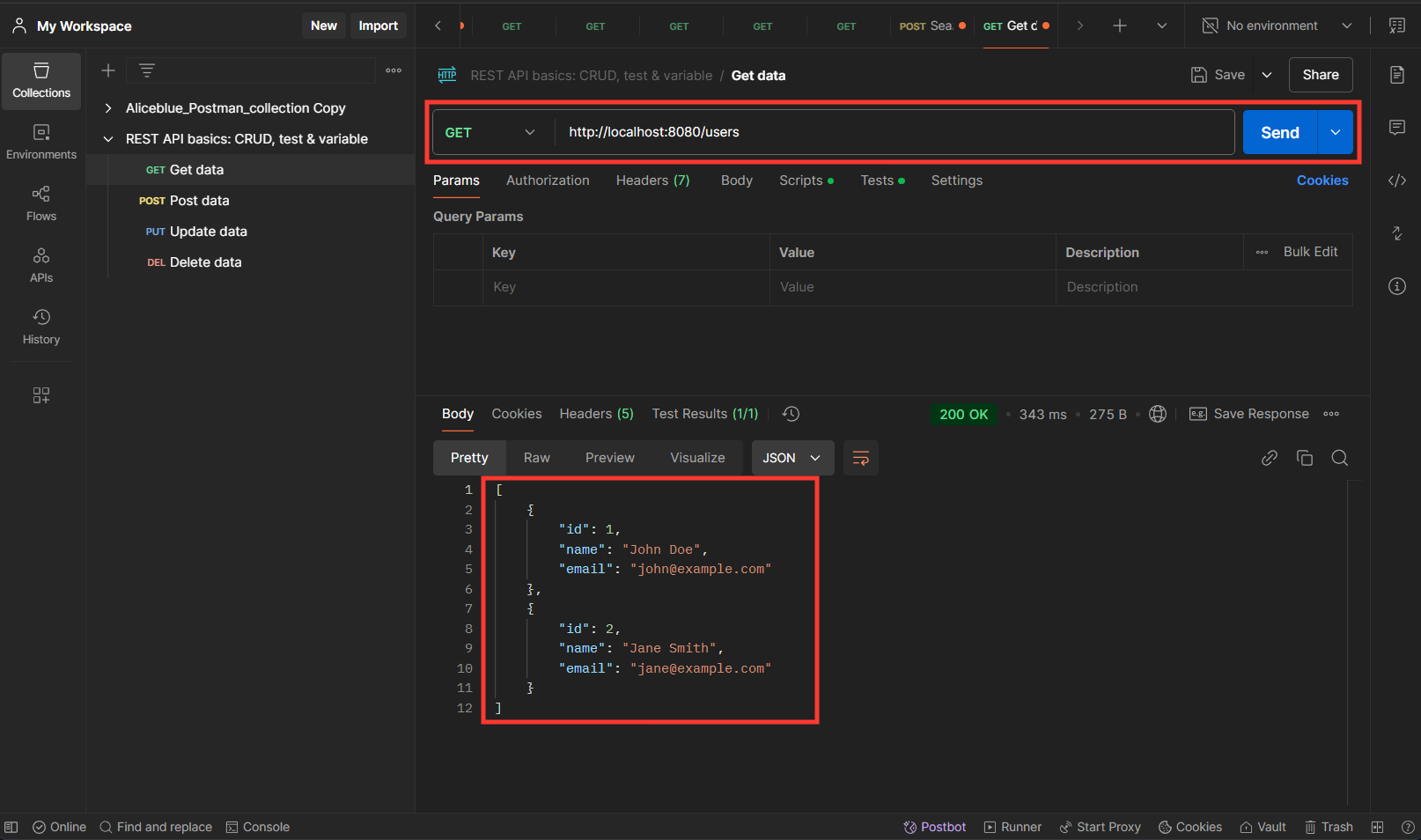
// 1️⃣ Get All Users
@GetMapping
public List getAllUsers() {
return userList;
}
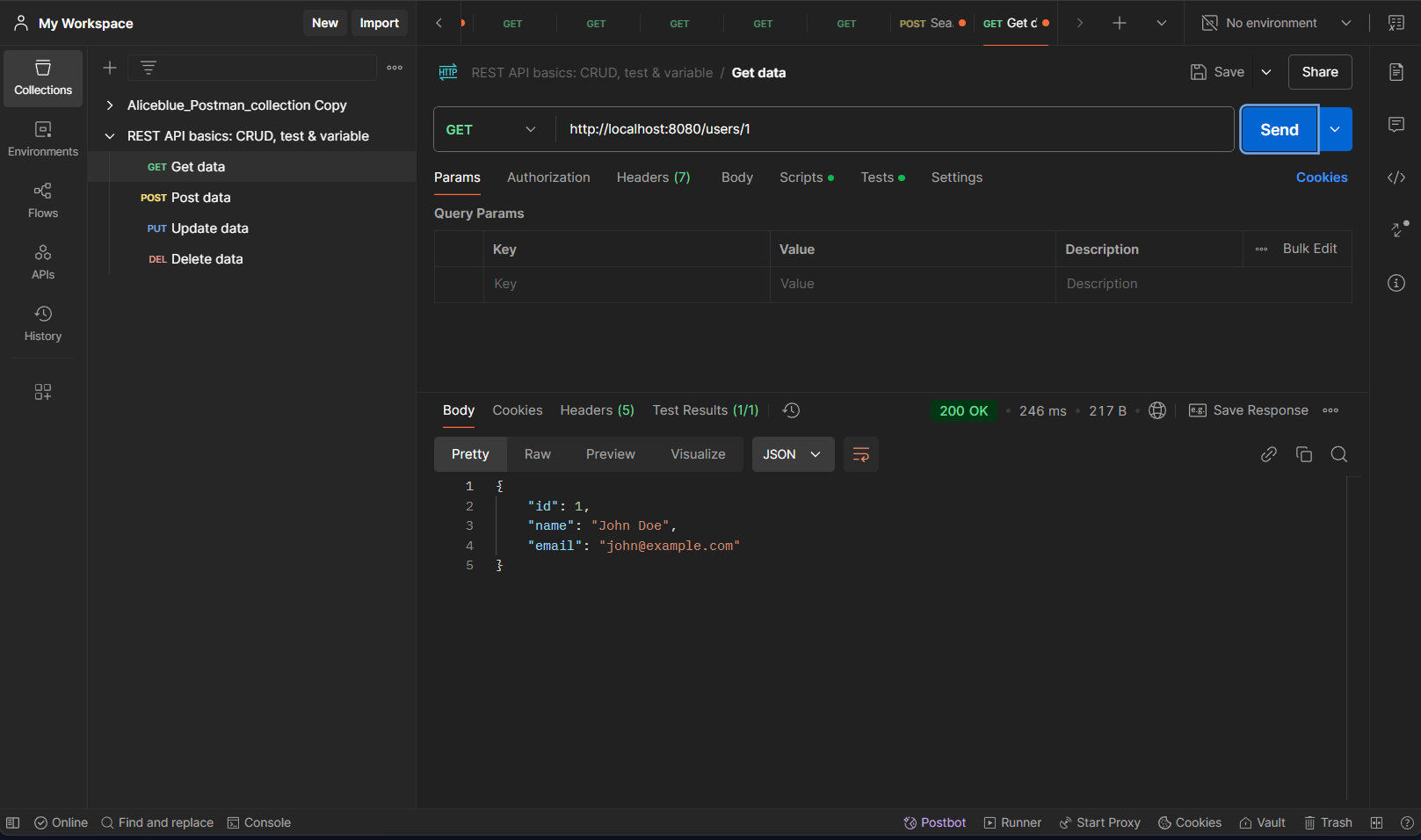
// 2️⃣ Get a Single User by ID
@GetMapping("/{id}")
public User getUserById(@PathVariable int id) {
return userList.stream()
.filter(user -> user.getId() == id)
.findFirst()
.orElse(null);
}
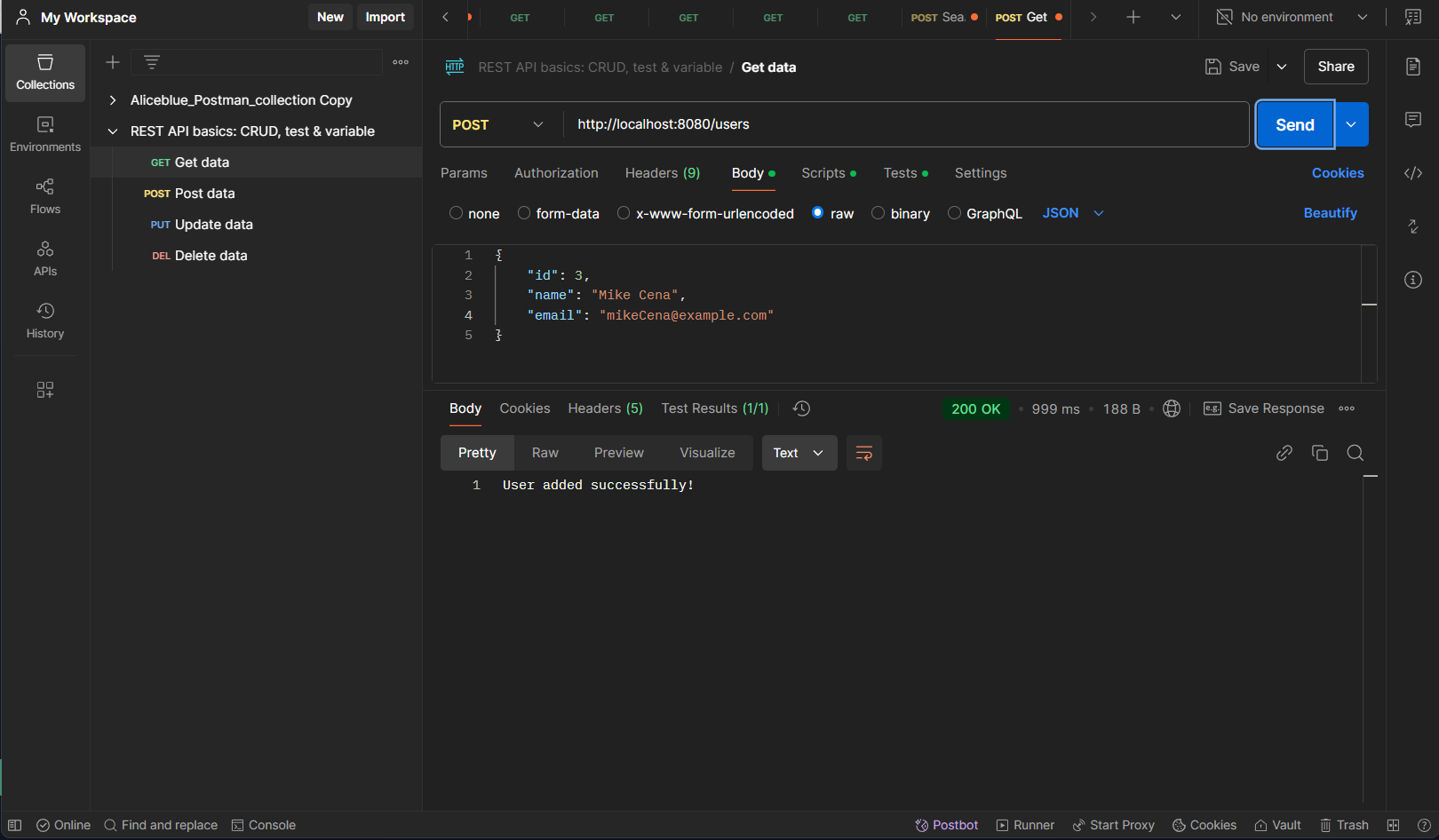
// 3️⃣ Create a New User
@PostMapping
public String createUser(@RequestBody User user) {
userList.add(user);
return "User added successfully!";
}
// 4️⃣ Update an Existing User
@PutMapping("/{id}")
public String updateUser(@PathVariable int id, @RequestBody User updatedUser) {
for (User user : userList) {
if (user.getId() == id) {
user.setName(updatedUser.getName());
user.setEmail(updatedUser.getEmail());
return "User updated successfully!";
}
}
return "User not found!";
}
// 5️⃣ Delete a User
@DeleteMapping("/{id}")
public String deleteUser(@PathVariable int id) {
userList.removeIf(user -> user.getId() == id);
return "User deleted successfully!";
}
}
Running the Spring Boot Application
Run the application using your IDE or with the following Maven command:
mvn spring-boot:run
Spring Boot starts an embedded Tomcat server (default: http://localhost:8080).
Testing the REST API with Postman:
Once the application is running, test the endpoints:
Get All Users
Get a Single User by ID
Create a New User
Update a User
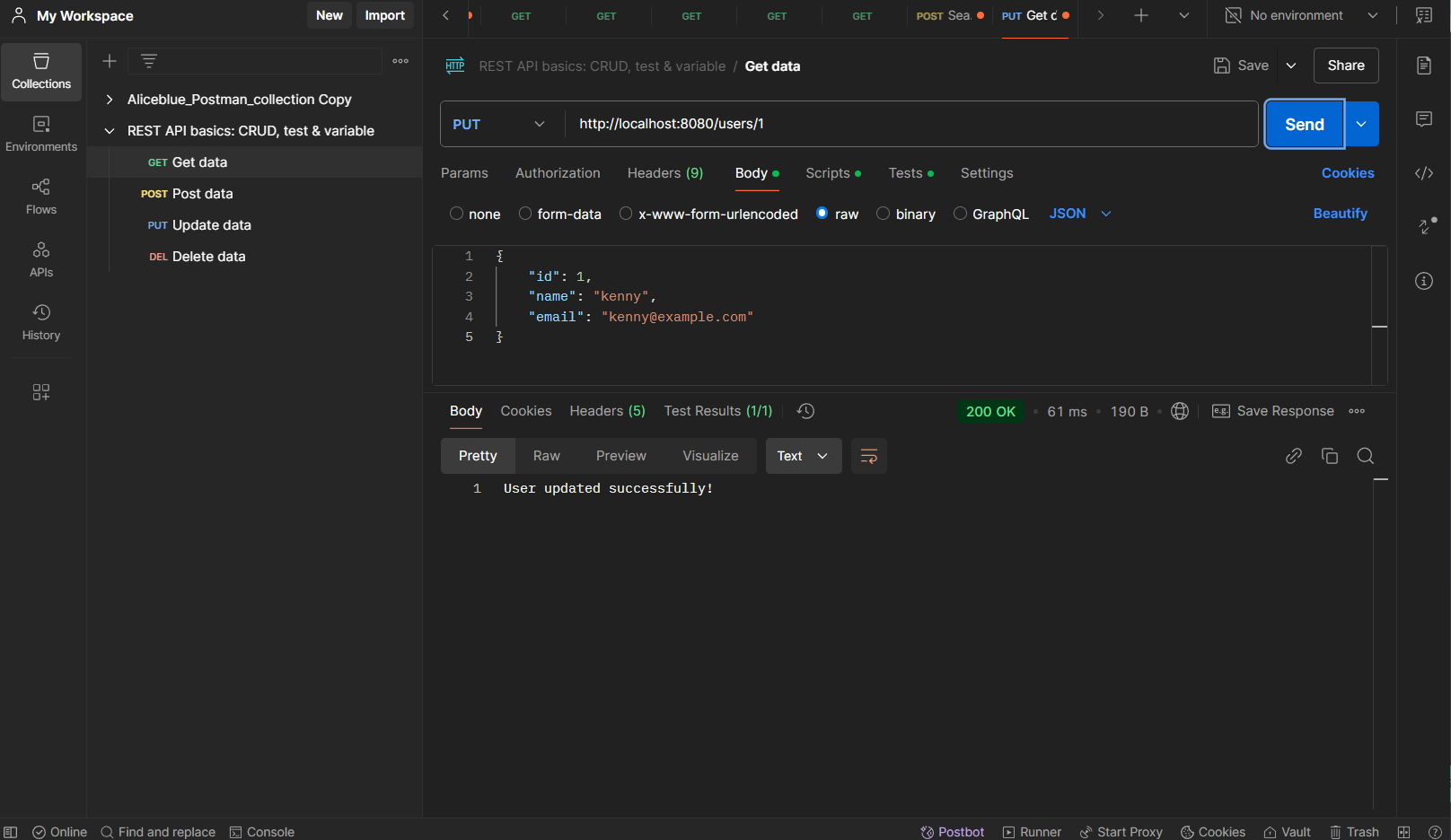
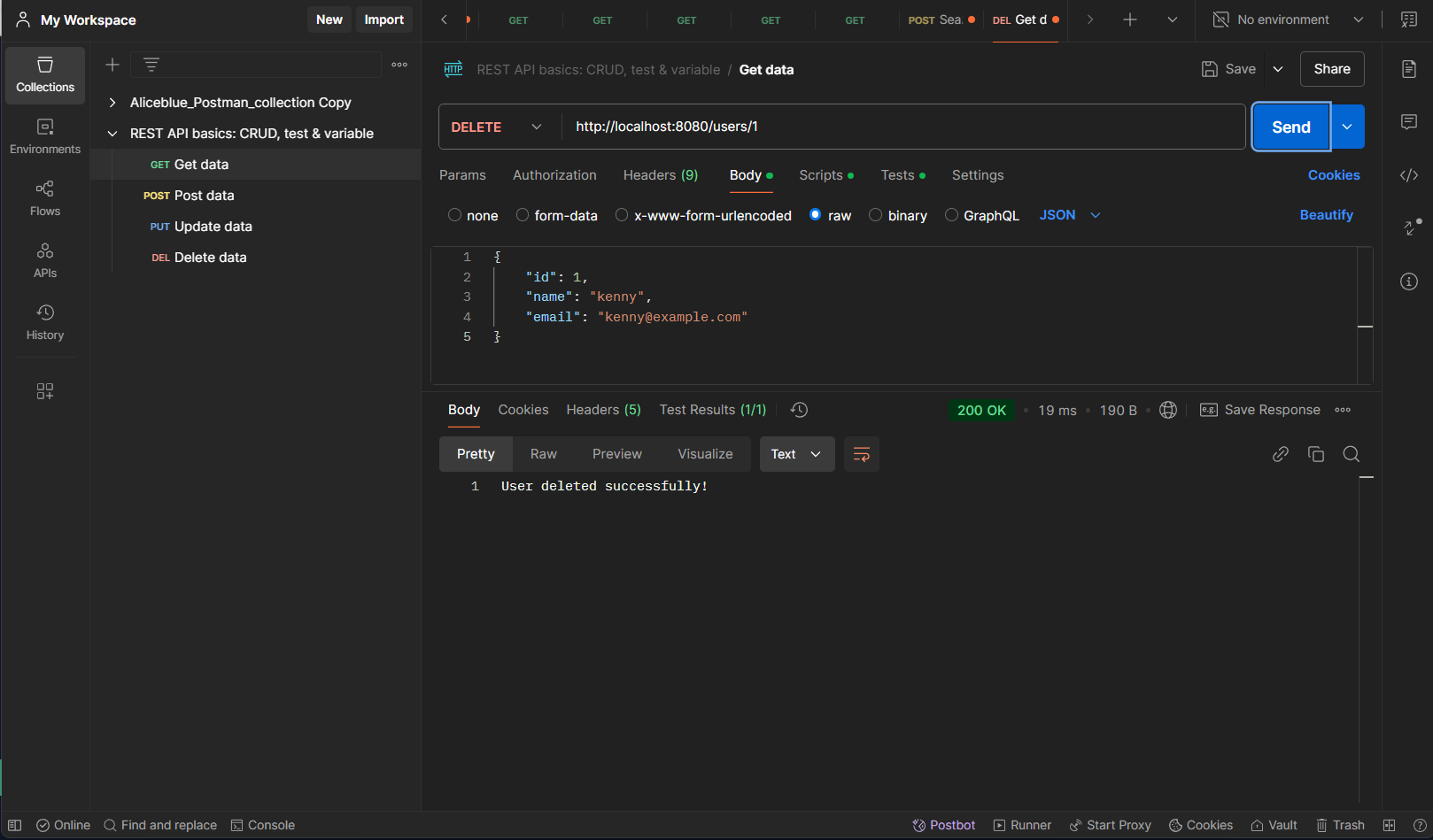
Delete a User