Advertisement
Google Ad Slot: content-top
Spring Boot JWT (JSON Web Token)
What is JWT?
JWT (JSON Web Token) is a compact, URL-safe means of representing claims to be transferred between two parties. It is commonly used for stateless authentication in APIs.
How JWT Works?
1️⃣ User logs in → Sends username & password
2️⃣ Server validates credentials → Generates a JWT token
3️⃣ Token is returned to the client
4️⃣ Client sends token in Authorization header in each request
5️⃣ Server verifies token before allowing access
Add JWT Dependencies:
Add the following dependencies in pom.xml:
Configure JwtService Class:
Create a Service class to generate & validate JWT tokens.
import io.jsonwebtoken.Claims;
import io.jsonwebtoken.Jwts;
import io.jsonwebtoken.SignatureAlgorithm;
import io.jsonwebtoken.io.Decoders;
import io.jsonwebtoken.security.Keys;
import org.springframework.security.core.userdetails.UserDetails;
import org.springframework.stereotype.Service;
import javax.crypto.KeyGenerator;
import javax.crypto.SecretKey;
import java.security.Key;
import java.security.NoSuchAlgorithmException;
import java.util.Base64;
import java.util.Date;
import java.util.HashMap;
import java.util.Map;
import java.util.function.Function;
@Service
public class JwtService {
private static final String SECRET = "TmV3U2VjcmV0S2V5Rm9ySldUU2lnbmluZ1B1cnBvc2VzMTIzNDU2Nzg=\r\n";
private String secretKey;
public JwtService(){
secretKey = generateSecretKey();
}
public String generateSecretKey() {
try {
KeyGenerator keyGen = KeyGenerator.getInstance("HmacSHA256");
SecretKey secretKey = keyGen.generateKey();
System.out.println("Secret Key : " + secretKey.toString());
return Base64.getEncoder().encodeToString(secretKey.getEncoded());
} catch (NoSuchAlgorithmException e) {
throw new RuntimeException("Error generating secret key", e);
}
}
public String generateToken(String username) {
Map claims = new HashMap<>();
return Jwts.builder()
.setClaims(claims)
.setSubject(username)
.setIssuedAt(new Date(System.currentTimeMillis()))
.setExpiration(new Date(System.currentTimeMillis() + 1000*60*30))
.signWith(getKey(), SignatureAlgorithm.HS256).compact();
}
private Key getKey() {
byte[] keyBytes = Decoders.BASE64.decode(secretKey);
return Keys.hmacShaKeyFor(keyBytes);
}
public String extractUserName(String token) {
// extract the username from jwt token
return extractClaim(token, Claims::getSubject);
}
private T extractClaim(String token, Function claimResolver) {
final Claims claims = extractAllClaims(token);
return claimResolver.apply(claims);
}
private Claims extractAllClaims(String token) {
return Jwts.parserBuilder()
.setSigningKey(getKey())
.build().parseClaimsJws(token).getBody();
}
public boolean validateToken(String token, UserDetails userDetails) {
final String userName = extractUserName(token);
return (userName.equals(userDetails.getUsername()) && !isTokenExpired(token));
}
private boolean isTokenExpired(String token) {
return extractExpiration(token).before(new Date());
}
private Date extractExpiration(String token) {
return extractClaim(token, Claims::getExpiration);
}
}
Create a User Entity:
import jakarta.persistence.*;
import lombok.*;
@Entity
@Table(name = "user")
@Getter
@Setter
@NoArgsConstructor
@AllArgsConstructor
public class User {
@Id @GeneratedValue(strategy = GenerationType.IDENTITY)
private Long id;
private String username;
private String password;
private String role; // e.g., ROLE_ADMIN, ROLE_USER
}
Implement User Repository:
import org.springframework.data.jpa.repository.JpaRepository;
import org.springframework.data.jpa.repository.JpaSpecificationExecutor;
import java.util.Optional;
public interface UserRepository extends JpaRepository, JpaSpecificationExecutor {
Optional findByUsername(String name);
}
Implement UserDetailsService for Authentication:
import org.springframework.security.core.userdetails.UserDetails;
import org.springframework.security.core.userdetails.UserDetailsService;
import org.springframework.security.core.userdetails.UsernameNotFoundException;
import org.springframework.stereotype.Service;
@Service
public class CustomUserDetailsService implements UserDetailsService {
private final UserRepository userRepository;
public CustomUserDetailsService(UserRepository userRepository) {
this.userRepository = userRepository;
}
@Override
public UserDetails loadUserByUsername(String username) throws UsernameNotFoundException {
User user = userRepository.findByUsername(username)
.orElseThrow(() -> new UsernameNotFoundException("User not found"));
return org.springframework.security.core.userdetails.User
.withUsername(user.getUsername())
.password(user.getPassword())
.roles(user.getRole()) // Ensure roles start with "ROLE_"
.build();
}
}
Create JWT Authentication Filter:
import jakarta.servlet.FilterChain;
import jakarta.servlet.ServletException;
import jakarta.servlet.http.HttpServletRequest;
import jakarta.servlet.http.HttpServletResponse;
import org.springframework.beans.factory.annotation.Autowired;
import org.springframework.context.ApplicationContext;
import org.springframework.security.authentication.UsernamePasswordAuthenticationToken;
import org.springframework.security.core.context.SecurityContextHolder;
import org.springframework.security.core.userdetails.UserDetails;
import org.springframework.security.web.authentication.WebAuthenticationDetailsSource;
import org.springframework.stereotype.Component;
import org.springframework.web.filter.OncePerRequestFilter;
import java.io.IOException;
@Component
public class JwtFilter extends OncePerRequestFilter {
@Autowired
JwtService jwtService;
@Autowired
ApplicationContext context;
@Override
protected void doFilterInternal(HttpServletRequest request, HttpServletResponse response, FilterChain filterChain) throws ServletException, IOException {
String authHeader = request.getHeader("Authorization");
String token = null;
String userName = null;
if(authHeader != null && authHeader.startsWith("Bearer ")){
token = authHeader.substring(7);
userName = jwtService.extractUserName(token);
}
if(userName != null && SecurityContextHolder.getContext().getAuthentication()==null){
UserDetails userDetails = context.getBean(CustomUserDetailsService.class).loadUserByUsername(userName);
if(jwtService.validateToken(token, userDetails)){
UsernamePasswordAuthenticationToken authToken =
new UsernamePasswordAuthenticationToken(userDetails, null, userDetails.getAuthorities());
authToken.setDetails(new WebAuthenticationDetailsSource().buildDetails(request));
SecurityContextHolder.getContext().setAuthentication(authToken);
}
}
filterChain.doFilter(request, response);
}
}
Configure Security:
import org.springframework.beans.factory.annotation.Autowired;
import org.springframework.context.annotation.Bean;
import org.springframework.context.annotation.Configuration;
import org.springframework.security.authentication.AuthenticationManager;
import org.springframework.security.authentication.AuthenticationProvider;
import org.springframework.security.authentication.dao.DaoAuthenticationProvider;
import org.springframework.security.config.annotation.authentication.configuration.AuthenticationConfiguration;
import org.springframework.security.config.annotation.web.builders.HttpSecurity;
import org.springframework.security.config.annotation.web.configuration.EnableWebSecurity;
import org.springframework.security.config.http.SessionCreationPolicy;
import org.springframework.security.core.userdetails.UserDetailsService;
import org.springframework.security.crypto.bcrypt.BCryptPasswordEncoder;
import org.springframework.security.web.SecurityFilterChain;
import org.springframework.security.web.authentication.UsernamePasswordAuthenticationFilter;
@Configuration
@EnableWebSecurity
public class SecurityConfig {
@Autowired
private UserDetailsService userDetailsService;
@Autowired
private JwtFilter jwtFilter;
@Bean
public AuthenticationProvider authProvider() {
DaoAuthenticationProvider provider = new DaoAuthenticationProvider();
provider.setUserDetailsService(userDetailsService);
provider.setPasswordEncoder(new BCryptPasswordEncoder(12));
return provider;
}
@Bean
public SecurityFilterChain securityFilterChain(HttpSecurity http) throws Exception {
http.csrf(customizer -> customizer.disable())
.authorizeHttpRequests(request -> request
.requestMatchers("register", "login")
.permitAll()
.anyRequest().authenticated())
.sessionManagement(session -> session.sessionCreationPolicy(SessionCreationPolicy.STATELESS))
.addFilterBefore(jwtFilter, UsernamePasswordAuthenticationFilter.class);
return http.build();
}
@Bean
public AuthenticationManager authenticationManager(AuthenticationConfiguration config) throws Exception {
return config.getAuthenticationManager();
}
}
Create Authentication Controller:
import org.springframework.beans.factory.annotation.Autowired;
import org.springframework.security.authentication.AuthenticationManager;
import org.springframework.security.authentication.UsernamePasswordAuthenticationToken;
import org.springframework.web.bind.annotation.*;
@RestController
@RequestMapping("/")
public class AuthController {
@Autowired
private JwtService JwtService;
@Autowired
private UserService service;
@Autowired
private AuthenticationManager authenticationManager;
@PostMapping("register")
public User register(@RequestBody User user) {
return service.saveUser(user);
}
@PostMapping("login")
public String login(@RequestBody User user) {
System.out.println(user.getUsername());
System.out.println(user.getPassword());
authenticationManager.authenticate(new UsernamePasswordAuthenticationToken(user.getUsername(), user.getPassword()));
return JwtService.generateToken(user.getUsername());
}
@GetMapping("auth")
public String auth() {
return "SuccessFull";
}
}
Testing the REST API with Postman:
Once the application is running, test the endpoints:
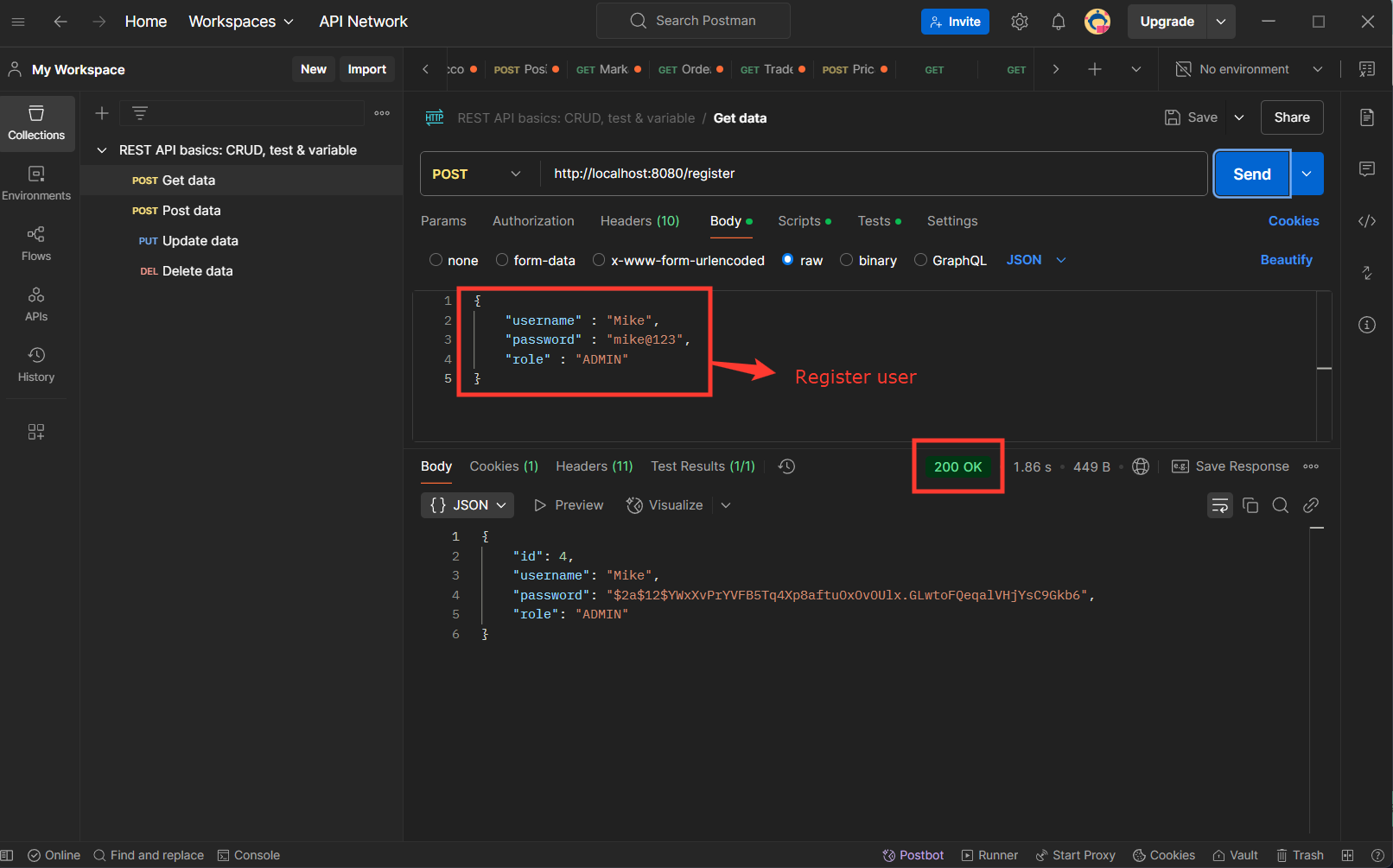
Register User POST:http://localhost:8080/register
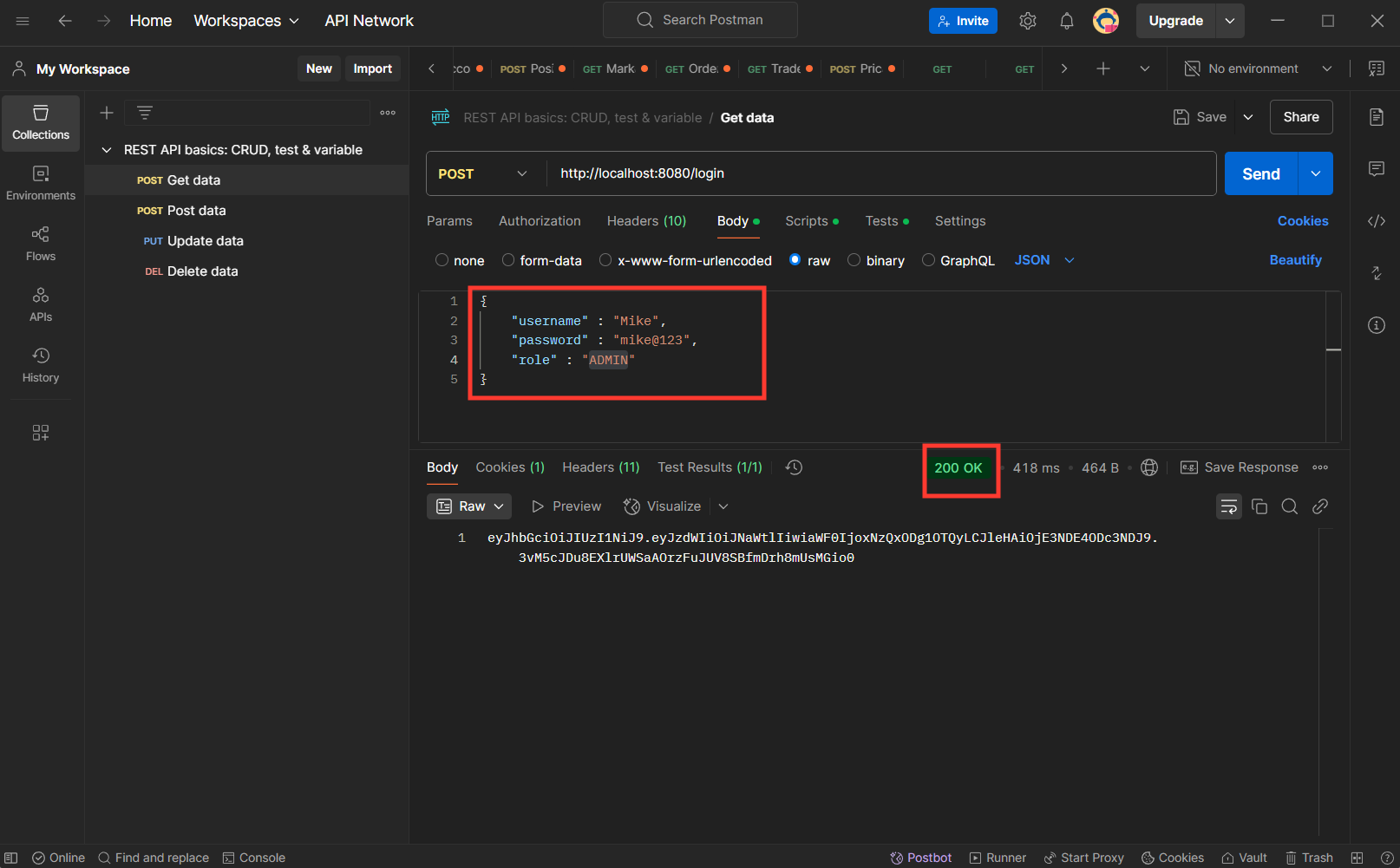
Login User GET:http://localhost:8080/login
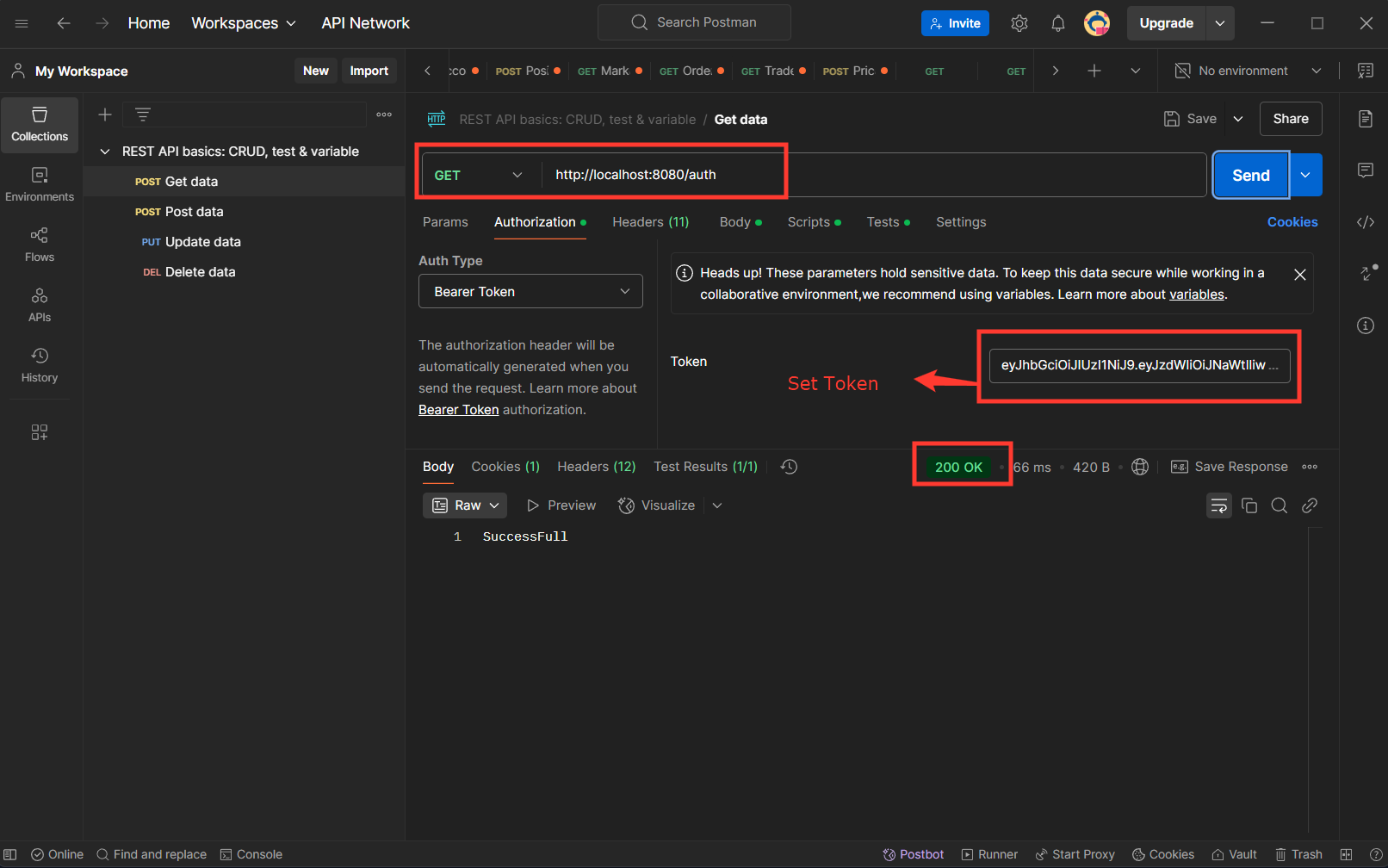
Set Token for other Route GET:http://localhost:8080/auth